


 02 9649 2111


 03 Dec 2025
 Victor Hu
Share



Air travel can feel daunting for many people with disability or reduced mobility, especially when navigating airports with a wheelchair or mobility scooter. The good news is that flying with your own mobility aid is entirely possible — and Australian airlines are well equipped to provide assistance every step of the way.
Whether you use a manual wheelchair, power wheelchair, or portable scooter, here’s everything you need to know about travelling by air — from check-in and boarding procedures to battery regulations and the best wheelchair for travelling.
Flying with a wheelchair or mobility scooter in Australia
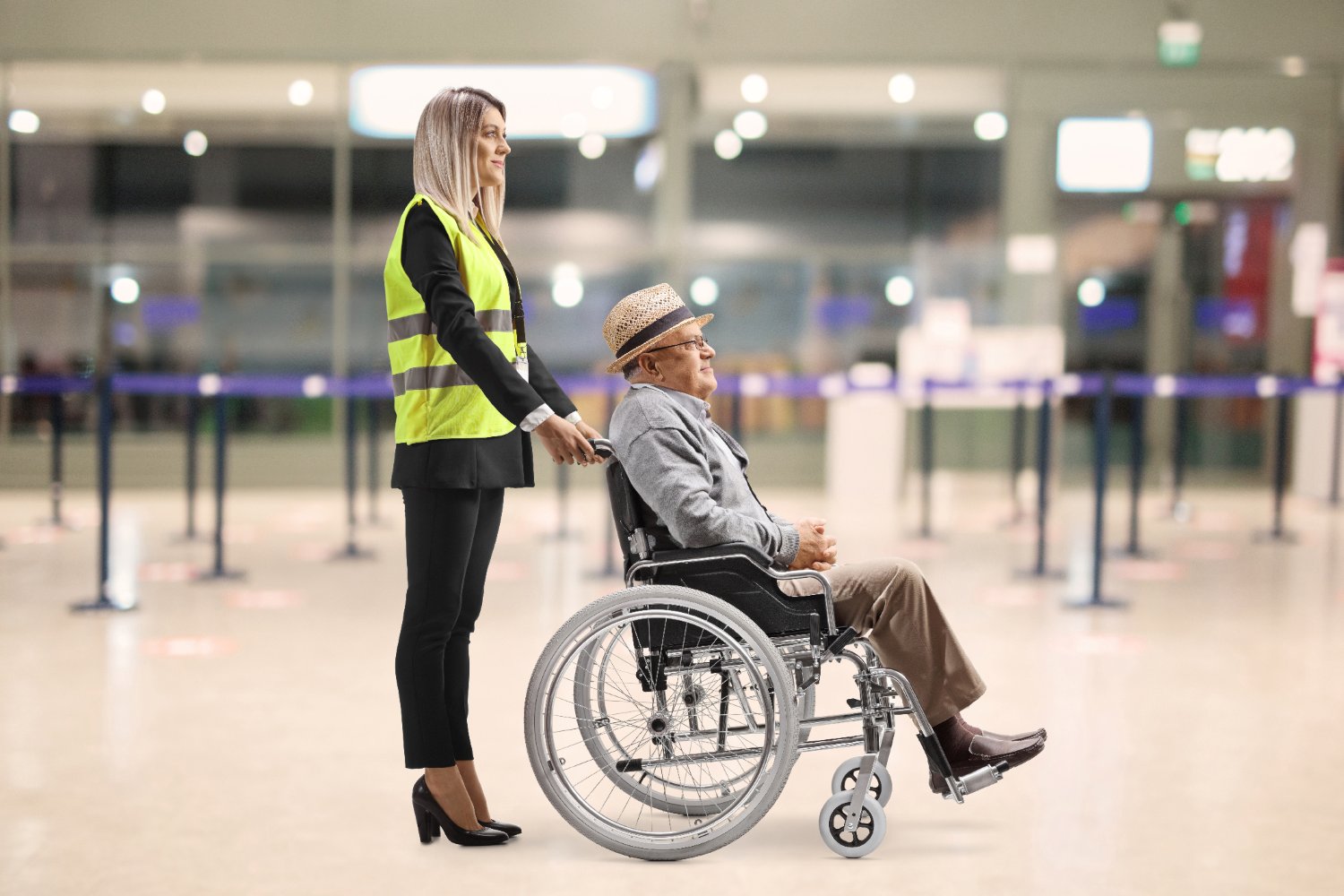
ID 268865613 | Young Wheelchair Airport © Ljupco | Dreamstime.com
Australian airlines are legally required to assist passengers who use mobility aids. Under the Disability Discrimination Act 1992 (Cth) and Civil Aviation Safety Authority (CASA) guidelines, all airlines must make reasonable accommodations for passengers with disability, including those who use wheelchairs or mobility scooters.
This means that with the right preparation, you can bring your own mobility aid on both domestic flights and international flights, or request wheelchair assistance from airline staff when needed.
When you’re booking your ticket, it’s crucial to inform the airline in advance that you’ll be travelling with a wheelchair or mobility device. You can do this when purchasing your ticket online, by calling your travel agent, or by contacting the airline’s special assistance team. You’ll be asked a few simple questions, such as:
- What type of mobility aid do you use (manual or battery powered)?
- What are the dimensions and weight of your mobility device?
- What type of battery does it use (gel, lithium ion, or non-spillable)?
This information helps the airline ensure your mobility equipment is handled safely and complies with dangerous goods approval requirements.
Understanding airline safety regulations
All battery-powered mobility aids, including electric wheelchairs and mobility scooters, must comply with strict safety regulations for air travel. These rules are designed to protect passengers, cabin crew, and aircraft staff.
Here’s what you need to know about battery types:
- Lithium-ion batteries: These are the most common in electric mobility aids. Airlines typically require that lithium batteries be removed and carried in carry-on luggage if they exceed a certain watt-hour (Wh) limit. Check your device’s specifications — most airlines allow up to 300 Wh or two batteries of 160 Wh each.
- Gel or sealed lead-acid batteries: These are non-spillable and can usually remain attached to the wheelchair during transport. The airline staff will ensure the battery terminals are properly protected.
- Lithium metal batteries: These are not approved for use in mobility aids and cannot be taken on board.
Your wheelchair or scooter’s manufacturer label should clearly state that the battery meets airline requirements. If in doubt, check with your supplier or contact Active Mobility to confirm your mobility device complies with airline safety standards.
Flying with a power wheelchair or mobility scooter
Travelling with a battery-powered wheelchair or electric mobility scooter requires a little more preparation, but airlines have well-established procedures to make the process smooth. Before you fly, check your mobility device’s battery type, watt-hours, and size restrictions. You’ll need to tell the airline these details — and in most cases, you’ll be asked to:
- Switch your mobility aid to “free wheel mode” so it can be moved easily by airline staff.
- Disconnect or isolate the battery, depending on the model and battery type.
- Protect terminals to prevent short-circuiting during transport.
For safety reasons, batteries may need to be removed and carried in the cabin. Airline staff can guide you on whether your model requires this. Always pack any spare battery safely in a protective case and label it clearly.
Most airlines, including Qantas and Virgin Australia, offer additional mobility assistance upon request. Their trained cabin and ground crews understand how to assist with handling wheelchairs or mobility aids, boarding, and disembarking.
If you’re wondering, “Can we take scooters on aeroplanes?” — the answer is yes, provided they meet battery and dimension limits. Your electric scooter must fit within the maximum dimensions allowed for cargo storage and comply with the rules for transporting lithium-ion batteries.
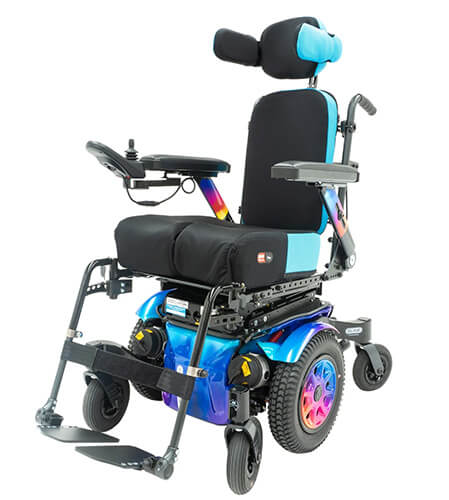
Product recommendation: The Glide Centro 2.0 Electric Wheelchair. Battery: 70-90 amp/hr, sealed.
The Centro 2.0 (pictured above) is a robust model designed for everyday use and occasional travel. Its adjustable seating and durable frame make it ideal for users who want a reliable wheelchair for travelling without compromising comfort or performance. Plus, with stylish custom builds available, you can travel in comfort and class!
Flying with a manual wheelchair
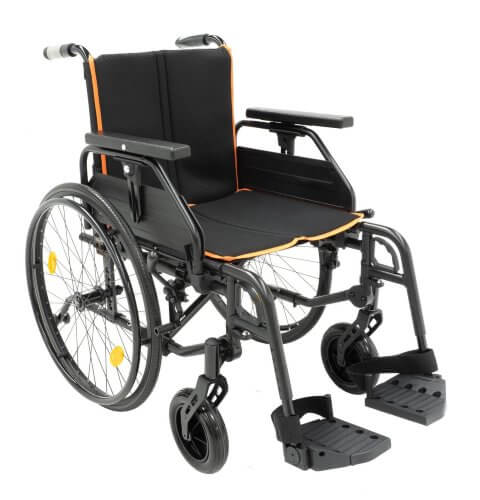
If you use a manual wheelchair, air travel is generally straightforward. Manual chairs are light, foldable, and easily stowed in the aircraft hold. You can often use your own wheelchair until boarding, and airline staff will assist with loading it into the cargo area.
For frequent travellers, a lightweight wheelchair for travelling makes the process even easier. Compact, foldable designs are easier to manoeuvre through airport terminals and simpler for staff to handle safely.
Product recommendation: AERIS Adjusta Wheelchair
The AERIS Adjusta (pictured above) offers a highly customisable design with modular components and precision fit adjustments. It’s an excellent choice for travellers who need both support and flexibility, and it’s designed to perform well in a variety of environments, from airport terminals to city streets.
Product recommendation: AERIS Aligna Wheelchair
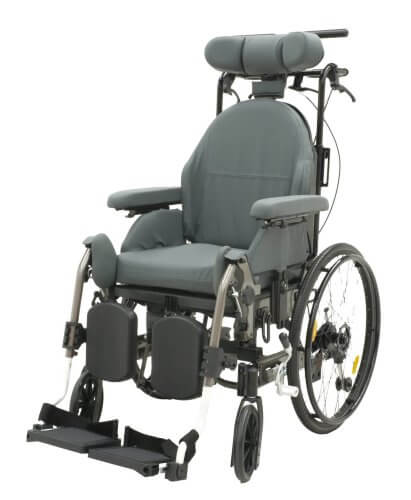
The AERIS Aligna is a smart choice for travellers who need a reliable, supportive manual wheelchair when moving through airports or boarding a flight. Its strong aluminium frame, waterproof upholstery, and smooth manoeuvrability make it well-suited to busy airport terminals, long distances between gates, and the stop-start nature of check-in and security lines.
What makes the Aligna stand out for travel is its high level of adjustability. The gas-assisted tilt-in-space backrest, adjustable armrests, calf pads, elevating leg rests, and removable footplates all help users stay comfortable during extended periods of sitting — particularly on long travel days.
&The quick-release rear wheels make it easier for airline staff to handle the wheelchair safely when loading it into the aircraft hold, and the attendant-operated drum brakes provide added security on airport ramps and inclines.
The Aligna has been fully crash tested to its 140kg capacity, offering reassurance when the wheelchair is stowed as checked baggage. Its padded, contoured cushions (with optional pressure care upgrades) help maintain comfort during delays, transfers, or when waiting at the departure gate. The optional carry bag is also helpful for keeping travel documents, small items or medical accessories organised and within reach.
Flying with power add-ons for manual wheelchairs
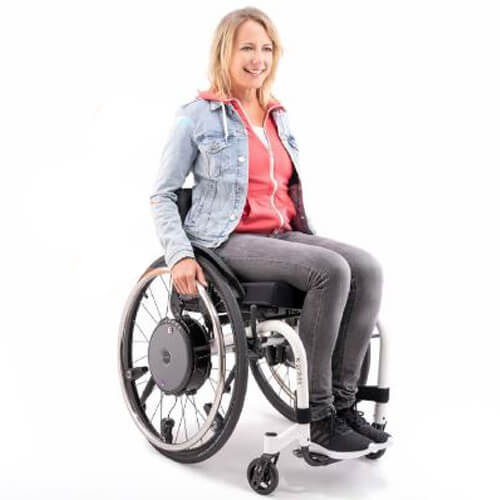
If you use a manual wheelchair with a power add-on (such as a front-drive unit or powered wheels), airlines will treat your setup differently depending on the location of the motor. Because these systems contain batteries, they fall under the same aviation safety rules that apply to battery-powered mobility aids.
For detachable motor add-ons, airlines may require you to remove the powered component before stowing your wheelchair in the aircraft hold. The battery may also need to be disconnected or carried in the cabin, depending on its type and watt-hour rating. It’s helpful to bring simple instructions, so the ground crew can see how the add-on detaches and how the battery is isolated for safe transport.
If the motor is built into the wheels (power-assist wheels), airlines often treat the wheelchair as a powered mobility device. They may require the powered wheels to be removed and stored separately, or they may ask you to isolate and secure the batteries before loading the wheelchair into the cargo hold.
As always, terminals must be protected to prevent accidental activation.
Whichever system you use, it’s best to contact the airline at least 48 hours before your flight and provide details about the battery type, size and whether the powered elements can be removed.
At check-in, our staff will guide you through any additional steps and ensure your equipment is stowed safely, so it’s ready for collection at the gate or baggage area upon arrival. For more information, see the Australian Government’s Civil Aviation Authority website.
Preparing for your journey
Good preparation makes all the difference when travelling with a wheelchair or mobility aid. Here are a few essential steps:
- Contact your airline early: Inform them at least 48–72 hours before your flight that you’ll be travelling with a wheelchair or mobility aid (ideally, you would let them know when booking). Provide model details, dimensions, and battery types.
- Arrive with sufficient time: Give yourself extra time at the airport terminal to complete check-in and boarding procedures without stress.
- Bring documentation: Carry your device manual or manufacturer’s battery specifications to show airline staff if needed.
- Secure your accessories: Remove detachable parts like headrests, cushions, or slide boards to prevent loss or damage during transit.
- Label your mobility aid clearly: Include your name, contact number, and flight details.
- Pack essentials in your carry-on: Include any assistive devices, medication, and charging cables in your carry-on baggage.
- Ask for reasonable care: Airlines must take reasonable care to handle your mobility equipment safely. If anything is damaged, report it before leaving the baggage collection area.
Check-in, boarding, and ground handling
When you arrive at the airport terminal, head to the check-in counter early — ideally at least one hour earlier than other passengers. This allows airline staff enough time to process your mobility equipment, address questions about battery handling, and provide any specific assistance you may need.
At check-in, you can choose to:
- Use your own wheelchair or mobility aid right up to the boarding gate, or
- Request wheelchair assistance, where the airline provides an aisle chair or standard airport wheelchair.
Once you reach the boarding gate, a member of the ground crew will assist you with transferring to an aisle wheelchair if required. These are designed to fit down the aircraft aisle safely and comfortably.
Most regular wheelchairs, manual wheelchairs, and battery-powered wheelchairs are stored securely in the aircraft hold. If your mobility aid weighs more than the airline’s equipment limit, staff will use a lift or mechanical hoist to safely transfer it to the cargo hold.
When you land, the ground crew will bring your wheelchair or scooter to the baggage collection area or, in some cases, directly to the aircraft door so you can use it immediately after disembarking.
International travel with mobility aids
When travelling overseas, the same principles apply — but be mindful that battery and weight limits may differ between airlines and countries. For instance, U.S. flights often have stricter limits on lithium-ion batteries, and some international airports may have longer transfer distances.
Always check:
- Whether your battery-powered mobility aid requires dangerous goods approval.
- If your wheelchair or scooter fits the aircraft type and aircraft hold dimensions.
- Whether you’ll need to use an aisle wheelchair to board.
Many travellers find it helpful to book through an experienced travel agent familiar with mobility assistance requirements. They can coordinate with the airline to ensure specific assistance is arranged at both your departure gate and destination.
Enjoy freedom in the air with Active Mobility
Air travel doesn’t have to be stressful when you use a wheelchair or scooter. With the right preparation, communication, and equipment, you can fly confidently — knowing your mobility aid is handled safely and that help is always available when you need it.
At Active Mobility, we’re passionate about helping Australians enjoy independence wherever life takes them. Whether you’re heading interstate or abroad, our Centro 2.0 and AERIS Adjusta wheelchairs, along with our expert team, can help make your next trip comfortable, safe, and accessible.
Book a showroom appointment to view our travel-friendly mobility aids today, book a trial, or enquire online now!