

 02 9649 2111


 21 Oct 2026
Share

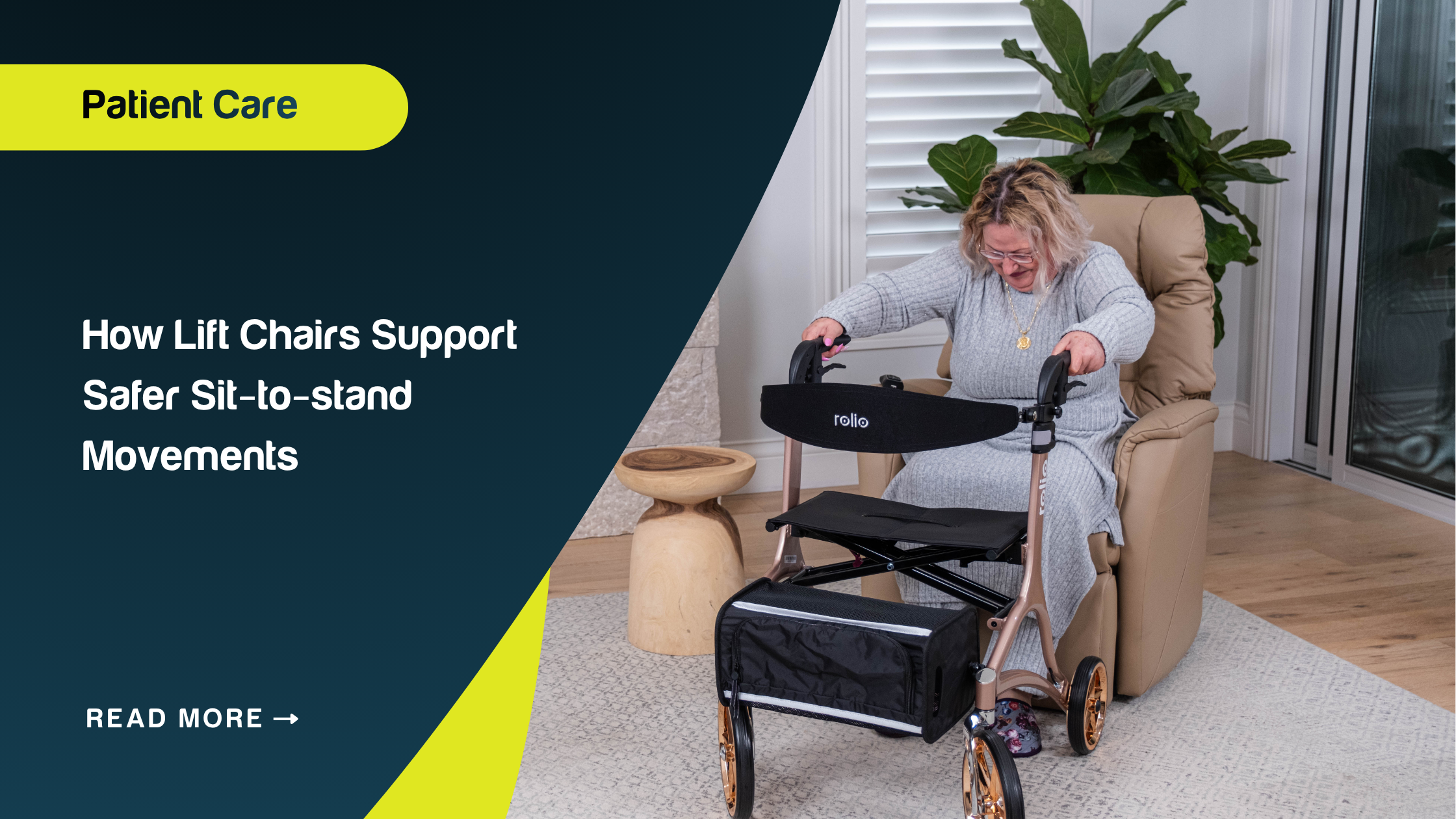
A transfer is one of the most personal moments in any care setting, whether that's at home or within a residential or healthcare facility. It might happen once a day or a dozen times, and each time, the person being moved relies on someone else's judgment and the lifting equipment beneath them.
When that equipment is well matched to the person and the space, a transfer feels routine and easy. When it isn't, even a simple move from bed to chair can feel rushed or awkward.
There's no single piece of equipment that suits every person. It's tempting to buy the most heavy-duty option just in case, but that's not always the right call. The best starting point is how much a person can weight-bear and move on their own.
- A ceiling hoist may suit someone who can't bear weight at all, supporting their whole body through the lift
- A standing hoist works for someone who can partly weight-bear and help with the movement themselves
- Slide sheets help with repositioning in bed, reducing friction rather than lifting weight
- A transfer board bridges a small gap, like from a bed to a wheelchair, for someone who can help with part of the move.
Matching equipment to what someone can actually do keeps them engaged in their own movement and helps maintain their independence. This is often where dignity shows up most clearly. The person is doing something, rather than having something done to them.
Why fit matters as much as function
Two slings can do the same job on paper and feel completely different to use. A sling that's too small can dig in at the legs or under the arms, whereas one that's too big won't support the body evenly, so the person feels unsteady rather than held.
The same goes for hoist positioning. Even a few centimetres out can turn a smooth lift into an awkward one.
Ill-fitting slings aren't just uncomfortable at the time, either. Sling use puts pressure through the thighs and groin when someone's seated, and through the lower back and buttocks when they're lying down. Over time, a sling that doesn't spread weight evenly can cause skin damage that a well-fitted one avoids.
This is why fit matters as much as the equipment itself. Our patient lifting equipment is only as good as how well it's set up for the person using it.
This is usually where it helps to get an occupational therapist's assessment before you buy anything. An OT assessment is essential for most clients when choosing manual handling equipment to ensure the correct piece is selected, and because OTs play an important role in educating families and support workers in the safe use of the equipment and transfer techniques. They can also assist in writing manual handling plans.
Keeping the person in the decision

It's easy for equipment decisions to be made around a person rather than with them. This often happens when family members and support workers are busy sorting out the details. Where you can, involve the person in adjusting settings or just talking through what a transfer will feel like.
This doesn't need to be formal. It can be as simple as asking someone whether they'd prefer to be moved to the left or right side of the bed. Small choices like these help someone feel like part of their own care, not just a passenger.
It also builds trust between the person and whoever's helping them. Someone who's had a say in how their equipment works is more likely to speak up if something feels wrong, and that's much better than staying quiet and hoping it gets better on its own.
The same idea applies to how equipment looks and feels, not just how it works. For the person using it every day, the smaller details aren’t small at all!
Setting up the space, not just the equipment
A ceiling-mounted hoist is well-suited to a permanent setup in a bedroom or bathroom. It provides a consistent lifting point without having to move a mobile unit into place each time. A mobile hoist offers more flexibility across different rooms or in a facility where several people share equipment.
Neither option is better in general. It depends on the room and how often transfers happen in the same spot. Getting this right early avoids a common problem: equipment that works fine on its own but doesn't fit the room it's used in.
The bathroom deserves its own thought here. Showering and using the toilet are already some of the most exposed parts of anyone's day. A cramped or poorly planned transfer only makes that harder.
A ceiling hoist that reaches from the bedroom into the bathroom can turn the hardest transfer of the day into one of the easiest. Building standards call for a clear floor space of at least 1,200 mm by 900 mm in front of a toilet, kept clear of the door swing, along with a shower with no step.
These figures are a useful guide when planning a bathroom for hoist access, even outside a fully accessible build. It's worth planning this space as carefully as any other, rather than leaving it until last.
Reviewing equipment as needs change
There's a confidence that builds once the right setup is in place and used every day. Support workers get faster and steadier with the equipment they use often. The person being moved starts to expect each step, rather than bracing for it.
Mobility needs don't usually stay the same for years. Someone who could partly weight-bear last year might need more support now, or might have regained enough strength to use something less restrictive. A sling that fit well a year ago can start to feel wrong, without anyone quite noticing why.
It’s important to note that your OT should be notified immediately if the client has noticed any change in function. In this case, the OT will conduct a thorough risk assessment, trial or prescribe more suitable equipment and update relevant manual handling plans.
Trialling and funding equipment
For NDIS participants, this kind of change doesn't have to mean starting the funding process again from nothing. Assistive technology needs, including hoists and slings, can change quickly for some conditions, and flexible funding packages exist to help with this. Lower-cost equipment can often be trialled or rented before you commit to buying it.
This trial time is worth making the most of. A sling or hoist that looks right on paper can still feel wrong in practice. There's no substitute for testing it with the actual person in the actual room before settling on it long-term.
Alternatively, if you’re looking to self-fund patient lifting equipment, our team can talk you through the options. No two situations look the same!
Whether you're a family choosing equipment for the first time or a facility reviewing what's already in place, the right support makes the process feel less overwhelming. Our occupational therapists are happy to help match the right hoist or sling to the person and the space, so contact us whenever it suits you, whether that's for early planning or a last question before you buy.